How to Crochet Thermal Stitch: A Practice Swatch
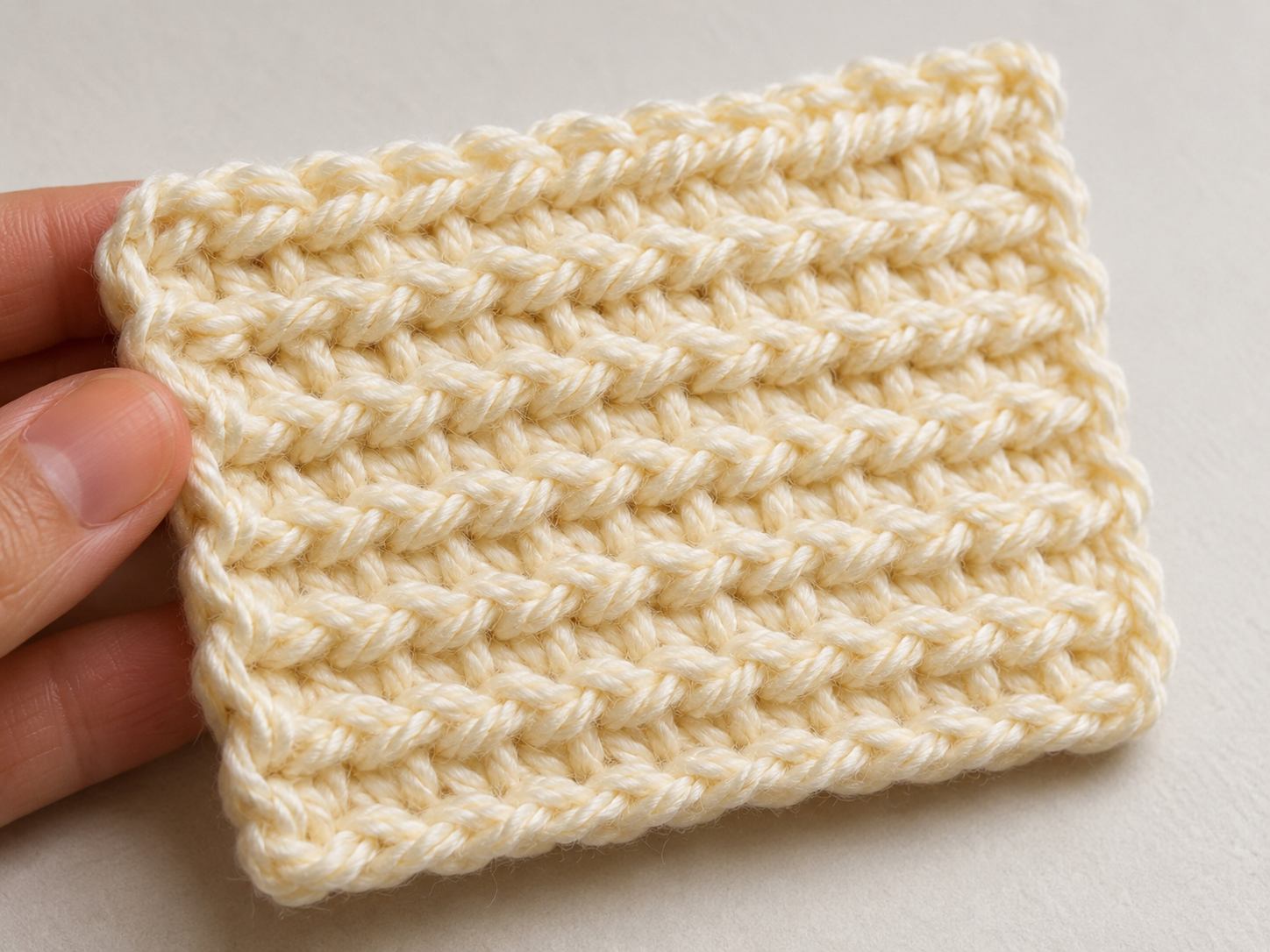
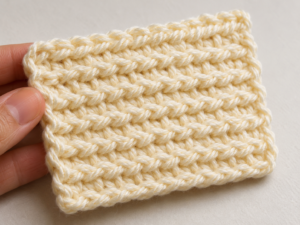
Thermal single crochet makes a dense, textured fabric by joining a loop at the top of the work to an unused loop from the row below. This thermal crochet stitch tutorial uses a small practice swatch so you can see both insertion points, count the edges, and correct mistakes before beginning a larger kitchen project. The swatch is for learning; it is not a tested heat-protective potholder.
At a glance
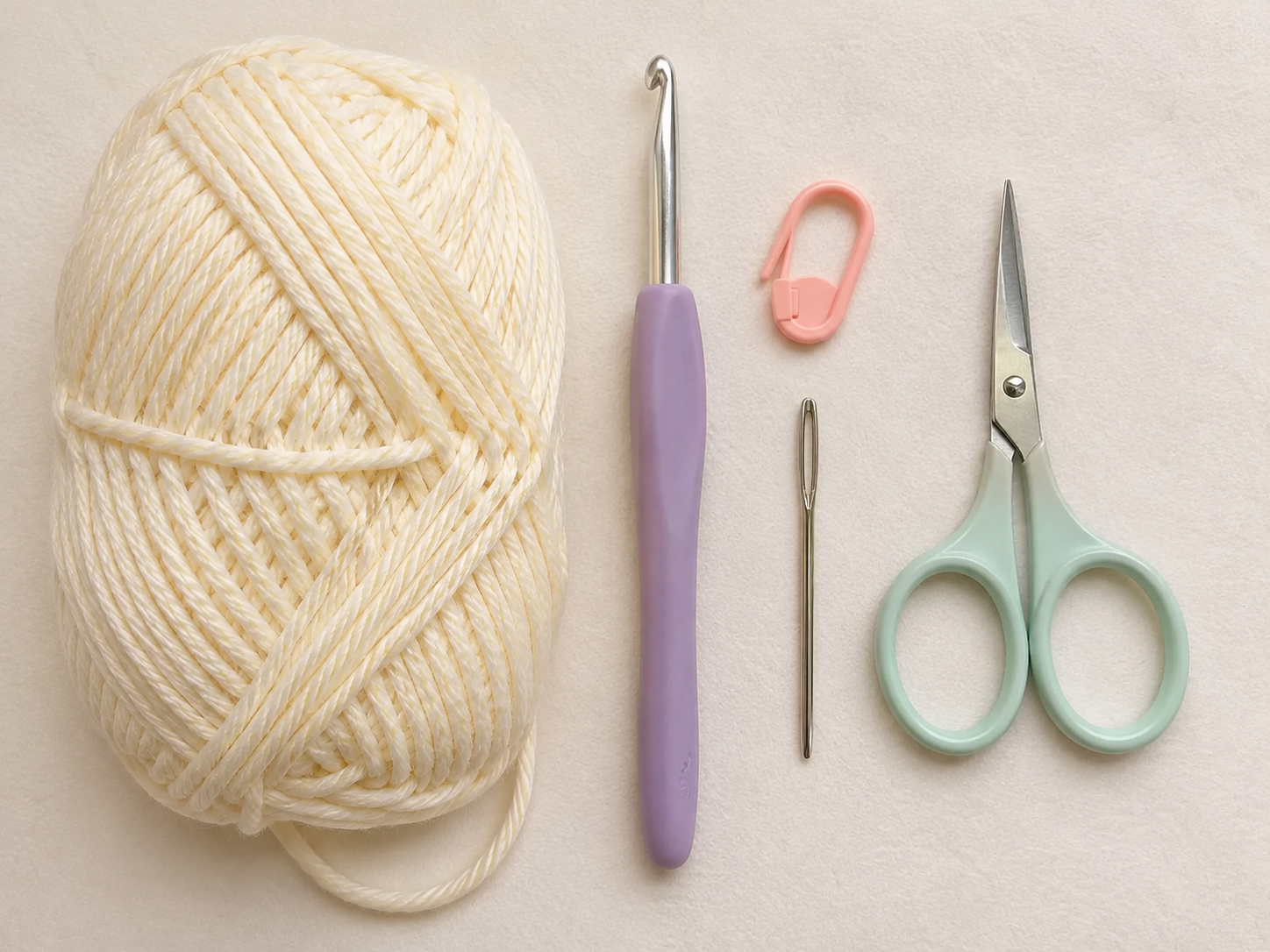
Project: a rectangular thermal single crochet practice swatch. Terms: US crochet terminology. Materials: yarn, a hook suited to the yarn, a marker, scissors, and a blunt yarn needle. Skills: making a chain, single crochet, turning, and counting stitches. The swatch has 12 stitches across; its finished size depends on yarn, hook, and tension.
On this page
For a kitchen project, the current project notes recommend cotton and caution that acrylic can melt near hot cookware. Fiber choice and fabric thickness alone do not establish a safe temperature rating. Use an appropriate, tested heat-protective product when handling hot cookware; this practice swatch is not protective equipment.
The result and the key decision
In ordinary single crochet you normally work under both strands at the top of the next stitch. In this lesson, the thermal stitch connects the back loop of that stitch to an unused loop from the row below. The two loops belong to aligned stitches. They are not the two halves of one V at the top edge.
The first decision is where the hook enters. After turning the work, hold the edge with the V-shaped stitch tops visible. The loop farther from you is the back loop. The unused loop from the preceding row sits just below it. Tilt the fabric toward you and away again until you can see both strands separately.
The practice sample has a deliberately small stitch count so you can check every row. Do not worry about matching a specific measurement. Instead, look for straight edges, an even count, and the same two-loop insertion throughout.
Materials and abbreviations
Choose a yarn with stitches you can see clearly. A smooth, light-colored yarn makes it easier to distinguish the upper V from the unused loop below. If you plan to explore a cotton kitchen project later, use cotton for the practice sample as well. Yarn weight and hook size affect how the stitches look, so select a comfortable pairing from your yarn label and adjust only if needed.
Keep a removable stitch marker nearby to identify the first stitch of a row. You also need scissors and a blunt yarn needle to finish the swatch. A hook that feels painfully tight makes it hard to learn the two-loop insertion; start with a size that lets the hook move without forcing it.
Abbreviations used here: ch means chain; sc means single crochet; st means stitch; sts means stitches; and back loop means the strand of a stitch top farther from you when the work is facing you. A yarn over means bringing the working yarn over the hook to draw it through a loop.
Roadmap for the sample
Make a foundation chain and one row of ordinary single crochet. Work a setup row into back loops only; this leaves the other top loop of each stitch unused. Turn, then make each thermal stitch through the next back loop and the corresponding unused loop below. Repeat the same movement across and in later rows.
A turning chain lifts the working yarn to the next row. In this single crochet sample it does not count as a stitch. The loop currently on the hook is also not a completed stitch. At the end of every row, count the stitch tops from one edge to the other without counting the turning chain.
Make the foundation and first row
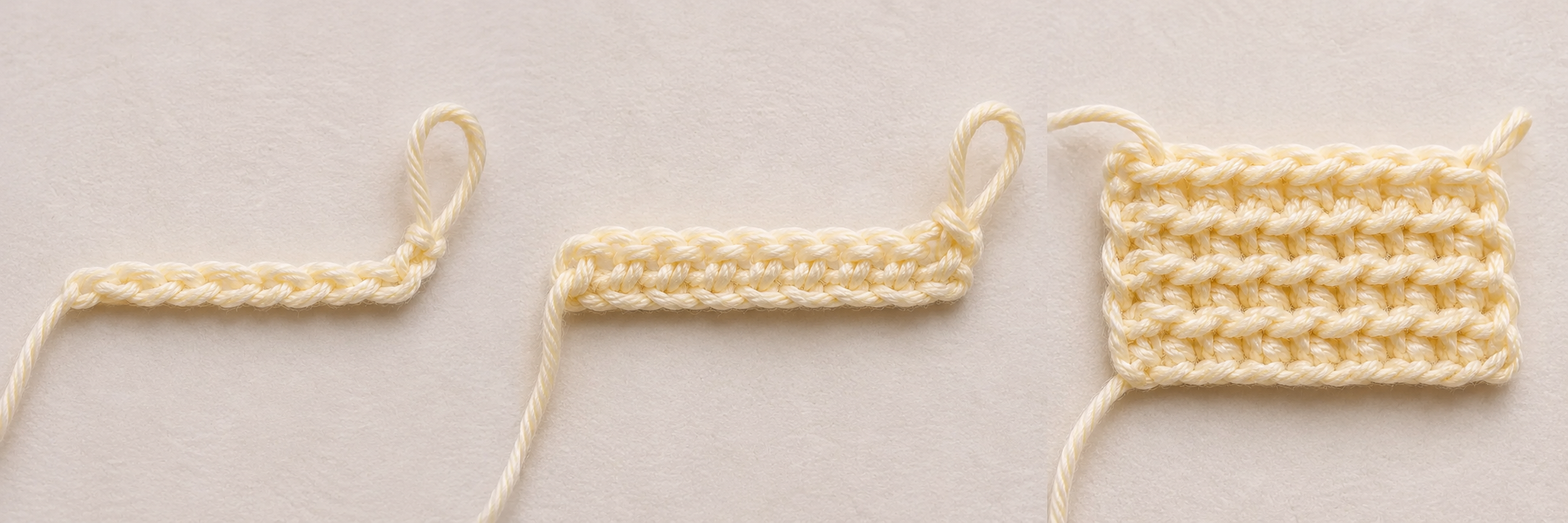
Make a slip knot on the hook and chain 13. To chain, yarn over and pull the yarn through the loop on the hook; repeat without tightening each chain around the shaft. Leave each chain large enough for the hook to enter. The slip knot and the active loop are not counted as chains.
Skip the chain nearest the hook. Insert the hook into the next chain, yarn over, and draw up a loop. Two loops are now on the hook. Yarn over and draw through both loops to complete one single crochet. Continue with one single crochet in each remaining chain, working consistently into the same part of each chain.
Checkpoint: the first row has 12 single crochets. Count the V-shaped tops; the skipped chain and active loop are not included. If you have 11 or 13, inspect the first and last chain and undo to the missed or doubled stitch. Place the marker in the last completed single crochet to make that edge easier to identify after turning.
Set up the unused loops
Chain one and turn the fabric so that the row you just made is at the top and you can work back across it. The turning chain is not a stitch. Find the first single crochet immediately beside the turning chain. Look at its top V: the back loop is the strand farther from you.
Insert the hook under that back loop only. Yarn over and draw up a loop, then yarn over and draw through both loops on the hook. Work one back-loop single crochet in each stitch across the row. Leave the front loop of each stitch unused; those loops form the lower strands you will pick up on the next pass.
Checkpoint: you have 12 completed stitches. The unworked loops form a line below the top edge. If you cannot see a lower loop for one position, check whether you accidentally worked under both strands of the V. Undo to that stitch and repeat through the back loop only.
Work the first thermal crochet stitch
Chain one and turn. Locate the first stitch next to the turning chain. Insert the hook under its back loop, the strand farther from you. Without making a yarn over yet, tilt the fabric and insert the hook under the unused loop directly below that same stitch. Both selected strands should sit on the hook.
Yarn over and draw the working yarn through both selected fabric loops. You should have two working loops on the hook. Yarn over again and pull through both loops to complete one thermal single crochet. Look at the stitch: it connects the top row to the lower unused loop without leaving either selected strand behind.
For the second stitch, move to the next V along the top edge and find the unused loop directly below it. Repeat the same sequence: back loop, lower unused loop, yarn over and pull up, yarn over and complete. Avoid reaching diagonally to the lower loop of the previous or following stitch; that can pull the fabric out of alignment.
Continue to the end of the row. The last stitch can be tucked at the edge. Find the marked stitch, identify its back loop and matching lower loop, and work through both. Do not crochet into the turning chain as an extra stitch.
Checkpoint: count 12 tops. The two edges should remain roughly aligned rather than gaining or losing stitches. If your count is wrong, trace the top Vs back from the marked edge and undo to the first missed or doubled position. Move the marker to the first stitch of the next row when you turn.
Repeat the thermal row
Chain one and turn. For each of the 12 stitches, insert through the back loop of the current top stitch and the corresponding unused loop immediately below, then complete a single crochet. Each row leaves a new unused strand for the following pass. The row you have just completed becomes the top row after you turn.
Work several practice rows, counting 12 stitches each time. There is no required number of rows for learning the stitch. Stop when you can find the two loops consistently and the fabric is large enough to examine without stretching. Keep your marker at the working edge if the first or last stitch is difficult to see.
At the end of each row, lay the fabric down without pulling it flat. The stitch count, not an exact width, is the main check. If the sample narrows, inspect the first and last stitches before changing tension. If it widens, check for two stitches made into one position or an accidental stitch in the turning chain.
Technique Lab
Follow the two loops as a pair
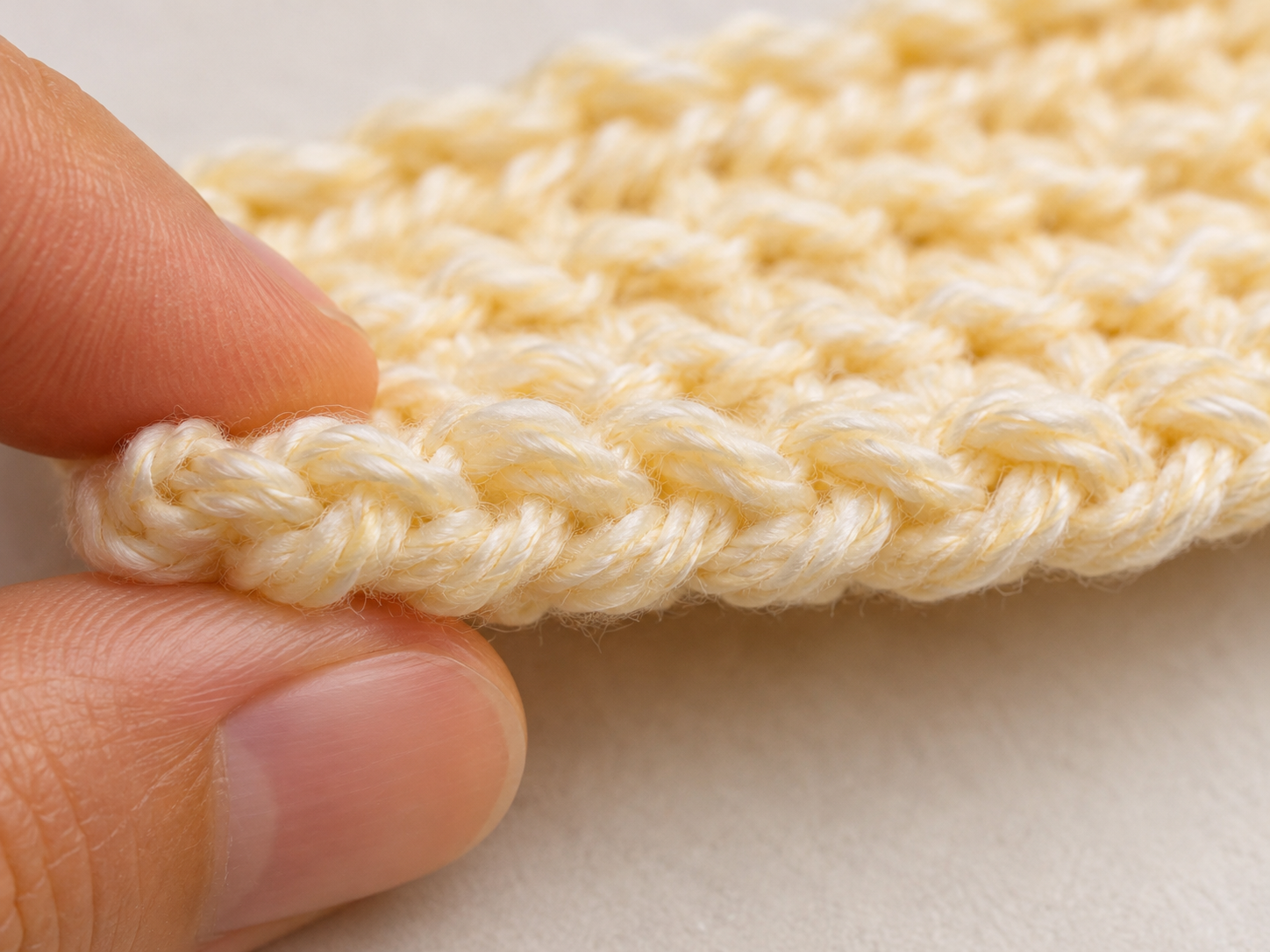
The top back loop and lower unused loop belong to the same position in the row. Pick up the top strand first, then the lower strand, before wrapping the working yarn. Once both strands are on the hook, complete the stitch in the same way as a single crochet. If the sample has a loose horizontal strand that was meant to be caught, undo to that position.
Find the first stitch after turning
The turning chain sits beside the first stitch. It is tempting to work into the chain or to skip the first V while searching for the lower loop. Put a marker in the first completed stitch of each row. On the return pass, locate that marker before working the last stitch.
Keep the hook moving
If the hook catches, rotate its tip slightly as you draw the yarn through. Do not pull hard enough to split the yarn. If you cannot insert the hook under both selected strands without force, loosen your working tension or try a larger hook for the practice sample.
Read the surface rather than guessing
Thermal fabric can show ridges and appear thicker than a plain single crochet swatch. Compare the front and back after several rows. The appearance depends on the yarn and tension; it is not a measurement of heat protection. The useful diagnostic is whether the loops are consistently linked and the count remains stable.
Finish the swatch
To close the practice edge, chain one and turn. For each position, insert the hook under both top loops of the current stitch and the corresponding unused loop below, then complete a single crochet. Work one stitch in each position across. This finishing pass catches the remaining lower loops while keeping the final row at 12 stitches.
Cut the yarn with enough tail to thread a blunt needle. Pull the tail through the active loop to fasten off. Weave the end through several stitch bodies on the back, change direction, and weave through another short section without puckering the fabric. Trim the excess once the tail stays in place. Repeat with the starting tail.
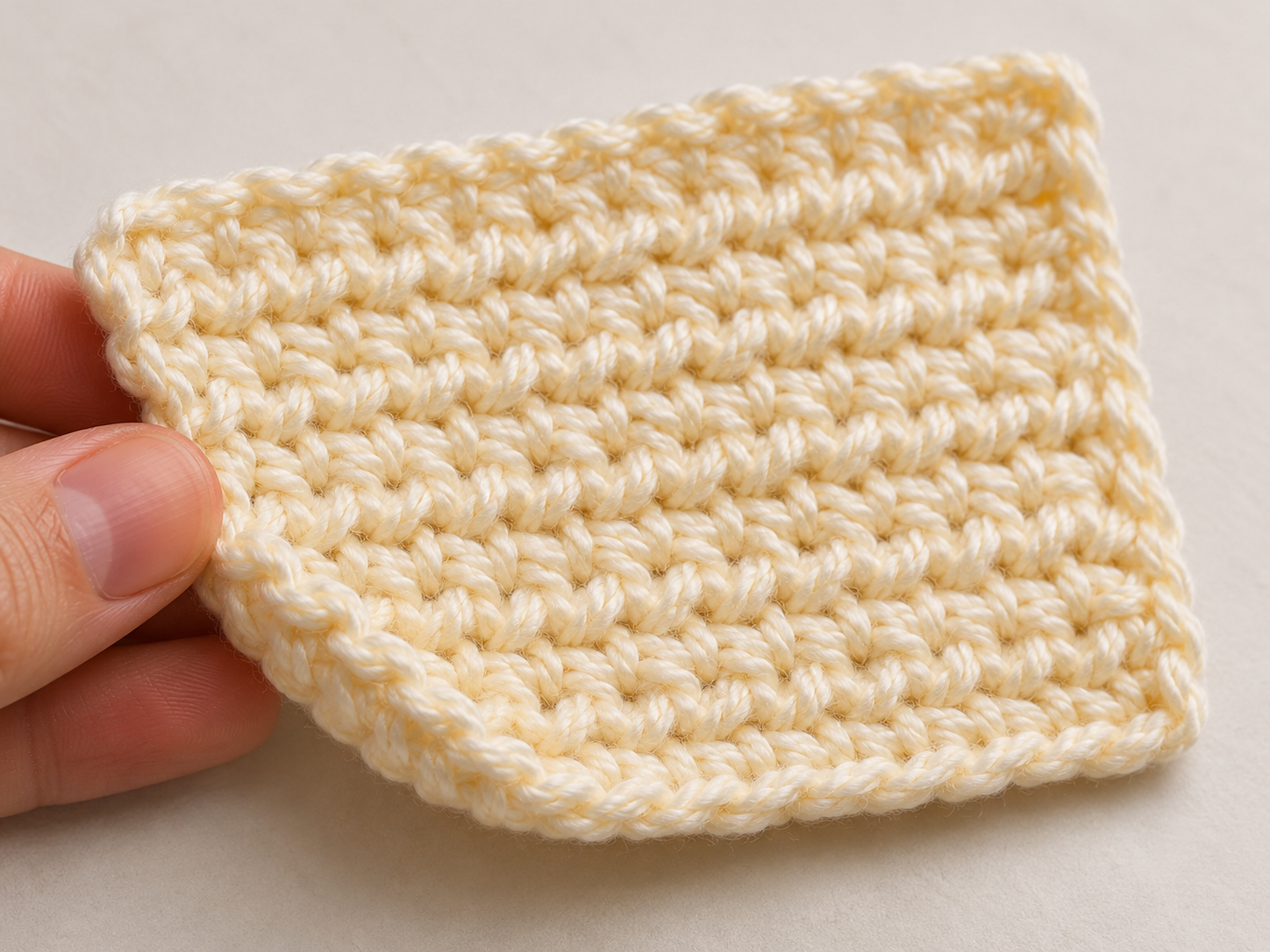
Turn the finished sample over and inspect both surfaces. The top edge should be closed, the ends should remain hidden, and the sides should not have large unexplained steps. Keep the sample as a reference for the loop path and your chosen yarn-and-hook combination.
Troubleshooting
The fabric gets narrower → The first or last stitch may have been skipped → Count 12 tops, find the missing edge stitch, and undo to the error.
The fabric gets wider → The turning chain may have been counted, or two stitches may share one base → Trace the edge and redo the affected row without working into the turning chain.
A horizontal loop remains loose → The corresponding lower loop may have been missed → Undo to that stitch, pick up both specified fabric loops, and complete the stitch again.
The hook is difficult to insert → Tension or hook size may make the strands too tight → Relax your grip or try a larger hook on a new sample. Do not omit the lower loop to make the stitch easier.
The sample curls or twists → Uneven tension or mismatched loop pairs may be pulling the fabric → Lay it down, check the paired insertion points, and redo the section where the distortion starts.
Frequently asked questions
Is thermal single crochet the same as ordinary single crochet?
The yarn-over and pull-through movements are the same, but the insertion points differ. The thermal stitch catches the back loop of the current stitch and an unused loop below it.
Does the turning chain count?
Not in this practice sample. Make one chain to turn, then work into the first actual stitch. Count 12 completed stitch tops across each row.
Can I use a different yarn?
Yes for a practice swatch. A smooth yarn makes the loop path easier to see. The finished size and texture will vary with the yarn, hook, and your tension.
Is the swatch safe to use as a potholder?
This sample has no verified heat rating. Do not assume it will protect your hand from hot cookware. Use a product intended and tested for that purpose.
What should I practice next?
Make another short swatch and place a marker in each edge stitch. Try to complete a row without missing the lower loop, then compare the two samples for consistent edges and stitch placement.
Before moving on, point to one top back loop and its matching unused loop below. If you can identify that pair across a full row and count 12 stitches afterward, you have the key movement for following a thermal single crochet pattern.
More in Uncategorized
How to Crochet Thermal Stitch: A Practice Swatch
How to Crochet an Amigurumi Ball in Continuous Rounds